At 55, I Didn’t Want My 30-Year-Old Face Back. I Just Wanted to Recognize Myself Again.
The family photograph that changed how I thought about beauty after 50—and the five overlooked signals I began paying attention to instead of obsessing over every line
By Catherine Wells, 55, author of Look Younger Than Your Age
*Beauty & Wellbeing · United States
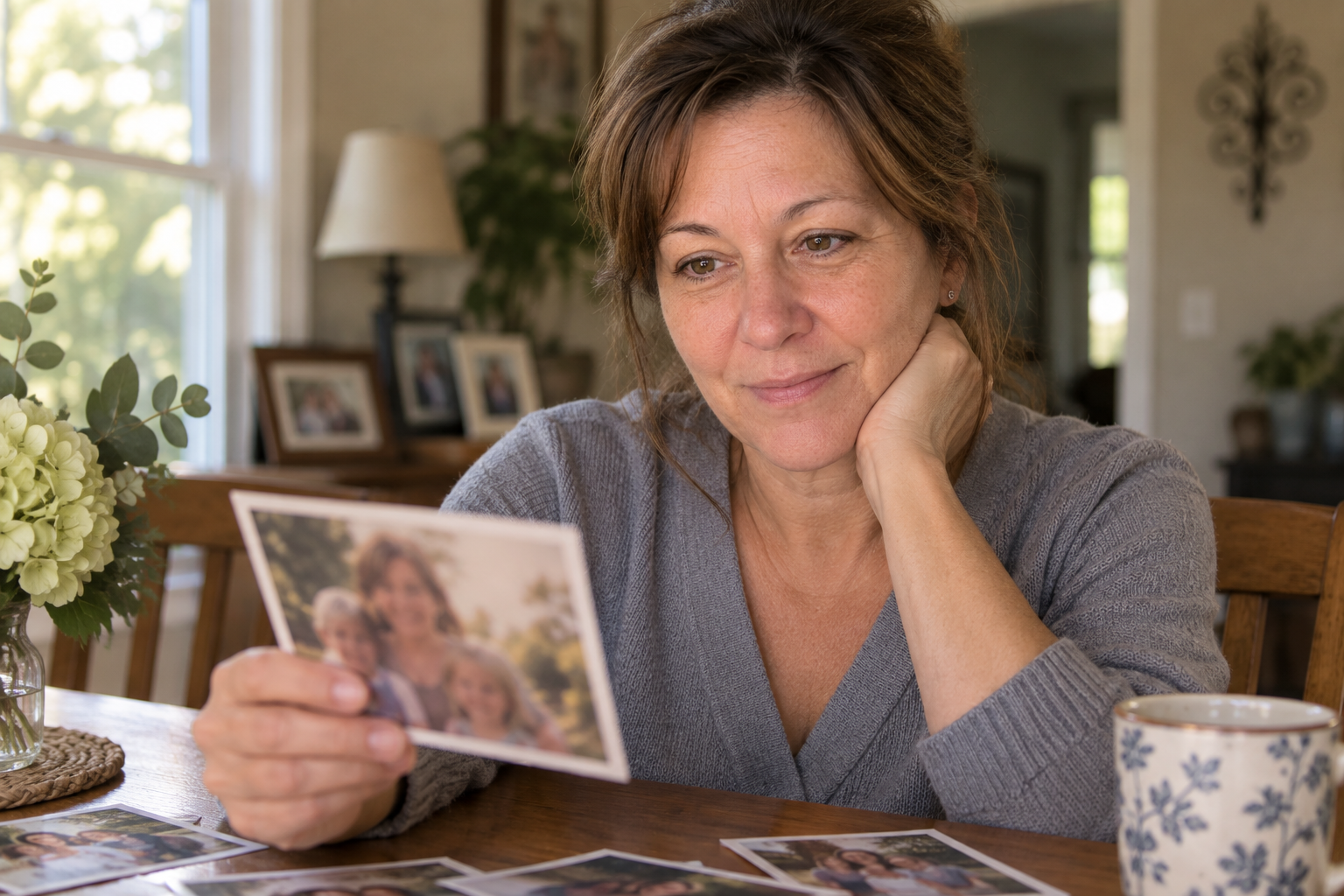
Let me begin with something I wish more women felt free to say: you can be grateful for your age and still want to look better.
You can love the life behind your face and still feel unsettled when that face suddenly looks tired or unfamiliar. You can reject injections, filters, and impossible standards without giving up the pleasure of caring for yourself.
Those ideas are not contradictory. I know because, at 55, I found myself holding both of them at once.
The photograph I kept returning to
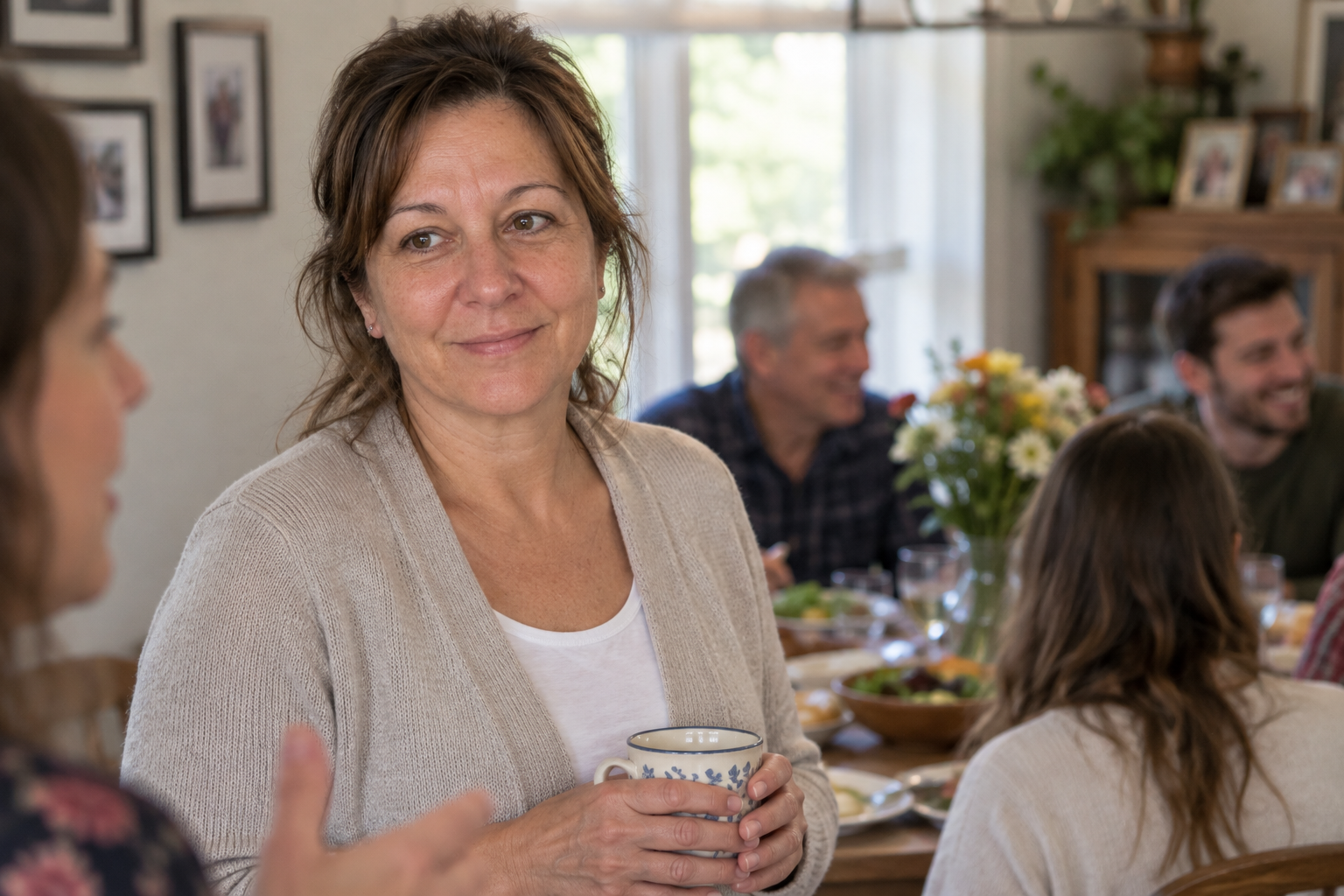
It was an ordinary family gathering. Someone was taking pictures while the rest of us talked, cleared plates, and tried to get everyone looking in the same direction.
When the photographs arrived, I smiled at the posed ones. Then I reached one taken when I did not know the camera was there.
I was standing near the edge of the frame, listening to someone speak.
I knew the woman was me. She had my blouse, my hair, my hands. But her face looked heavier than I remembered feeling. Her eyes seemed less present. Her mouth looked tense, almost unhappy.
Inside, I still felt curious, engaged, funny, and interested in what came next. The photograph did not show any of that.
Perhaps you know the thoughts that followed:
- “Do I always look this tired?”
- “When did my eyes start looking so small?”
- “Why does my makeup look heavier now than it did this morning?”
- “Is this simply what happens after 50?”
- “Am I being vain for caring?”
- “Why don’t I quite look like myself?”
That last question stayed with me.
I responded the way many women do: I tried harder
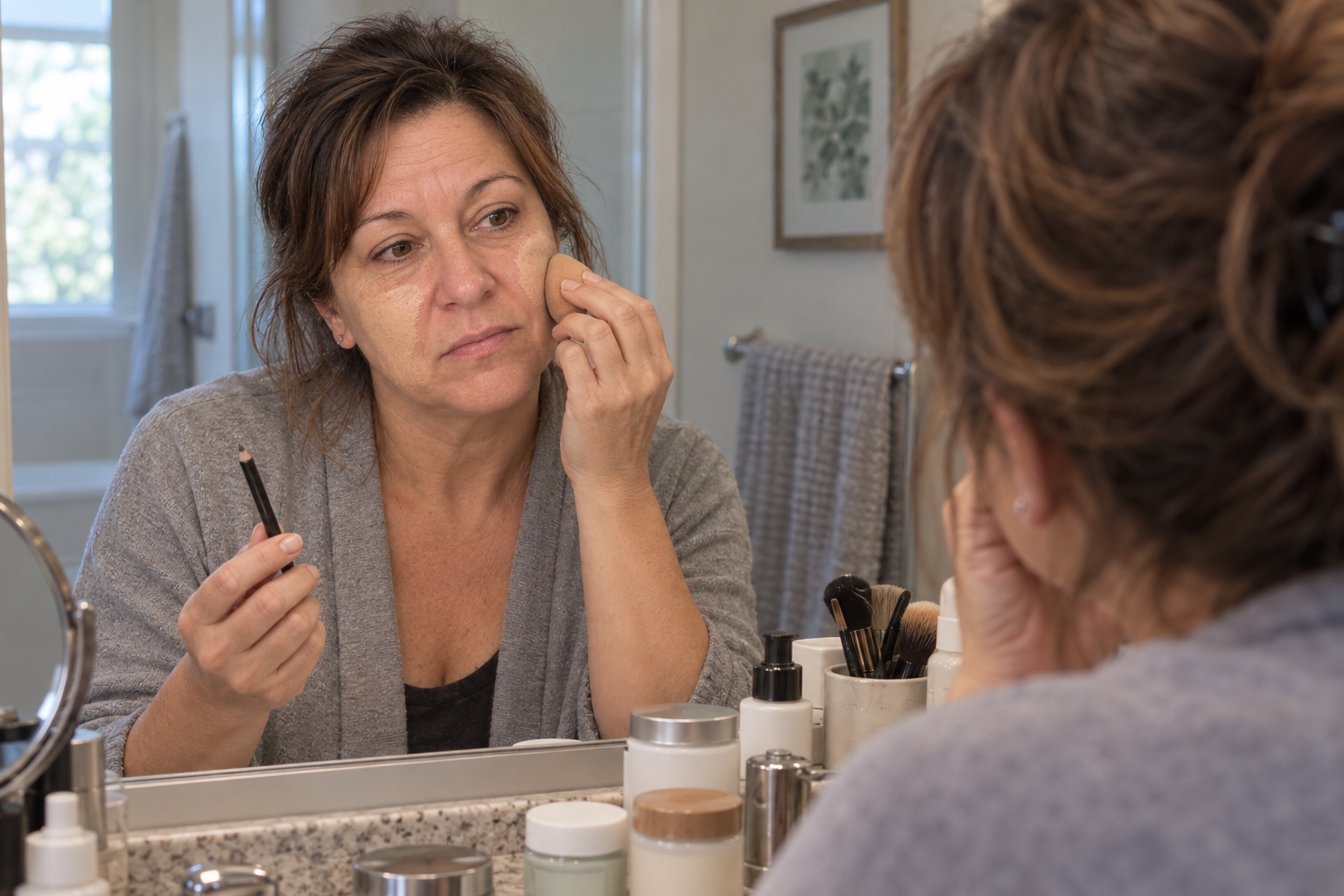
For a while, I assumed the answer was more: more coverage, more concealer, a stronger active, a darker line around my eyes, more powder, another product recommended by someone whose skin behaved nothing like mine.
My bathroom shelf became crowded, but my routine did not become wiser.
Some mornings, the extra effort made me look more made-up without making me look fresher. By afternoon, foundation collected where I did not want it. The dark eye makeup that looked crisp in the bathroom made my gaze look smaller in photographs.
That cycle is exhausting because it quietly suggests your face is the problem—and that if you cannot “fix” it, you simply have not bought enough.
Then I asked a different question:
“What actually makes a face look rested, radiant, and alive?”
What I noticed in women who looked wonderfully fresh
I began observing women around my age who looked especially vibrant.
They did not all have smooth skin. Some had silver hair. Some wore makeup; others barely wore any. They had different face shapes, budgets, backgrounds, and styles.
But certain qualities appeared repeatedly. Their skin caught the light rather than looking buried beneath product. Their eyes looked open and engaged. Their expressions were not frozen by tension. Their hair and clothing brought warmth toward the face. They stood and moved with presence.
The beauty instructions most of us learned had simply stopped evolving. We were taught to focus on lines because lines are easy to circle in a photograph and place beside a jar. We were shown products on younger faces and expected to reproduce the same result years later.
Your face did not fail. The old instructions failed to keep up with it.
The Five Signals of Freshness
Think of these five signals like lamps in the same room. Turning up one may help, but the whole room changes when you understand how they work together.
### 1. Radiance
Radiance is not glitter or poreless skin. It is the appearance of a complexion that is comfortable, hydrated, and able to reflect light.
When skin looks dry or dull, lines and uneven texture may appear more prominent. Heavier matte coverage can flatten it further. Gentler cleansing, appropriate hydration, broad-spectrum sun protection, and flexible makeup textures may support a fresher appearance.
### 2. Facial balance
Faces naturally change in volume, yet many women keep placing makeup exactly where they did decades earlier. Dark contour can deepen areas that already look hollow. Blush placed low can pull attention downward. Small changes in placement often make more sense than adding product.
### 3. Resting expression
Notice your jaw, forehead, and shoulders. The face carries concentration, stress, and habit. Releasing the jaw and lowering the shoulders will not erase age, but it can let your expression communicate more of the ease you actually feel.
### 4. The gaze
Dark, unblended lines around the entire eye can make the gaze appear smaller. Softer edges, attention to the upper lashes, natural brow definition, and lighter textures can bring clarity back without dramatic makeup.
### 5. Posture and presence
Nobody encounters your face in isolation. They encounter how you enter a room, carry your head, move, speak, and smile. Presence cannot be bottled, yet it may be noticed before any individual line.
These five signals gave me something I had never found on a product label: a coherent way to decide what deserved my attention.
## The guide my friends kept asking me to write
As I simplified my own habits, friends began asking what had changed.
There was no dramatic secret. I had not tried to become someone else. I had stopped treating every feature as an isolated flaw and started working with the complete picture.
Their questions became the reason I created Look Younger Than Your Age.
Despite the title, this is not about pretending to be 30. It is about understanding what can make you look fresher and feel more like yourself at the age you are now.
The guide contains 25 focused chapters organized into six practical areas:
1. the signals that create a tired or radiant overall impression;
2. gentle cleansing, hydration, sun protection, and a manageable routine;
3. complexion, eyes, brows, cheeks, and lips;
4. haircut, color, volume, and texture;
5. clothing colors, posture, neck, hands, and finishing details;
6. sleep, nourishment, movement, and self-image.
You do not have to follow every suggestion. Begin with the section that feels most relevant and build from there.
What changed was quieter—and more valuable—than a makeover
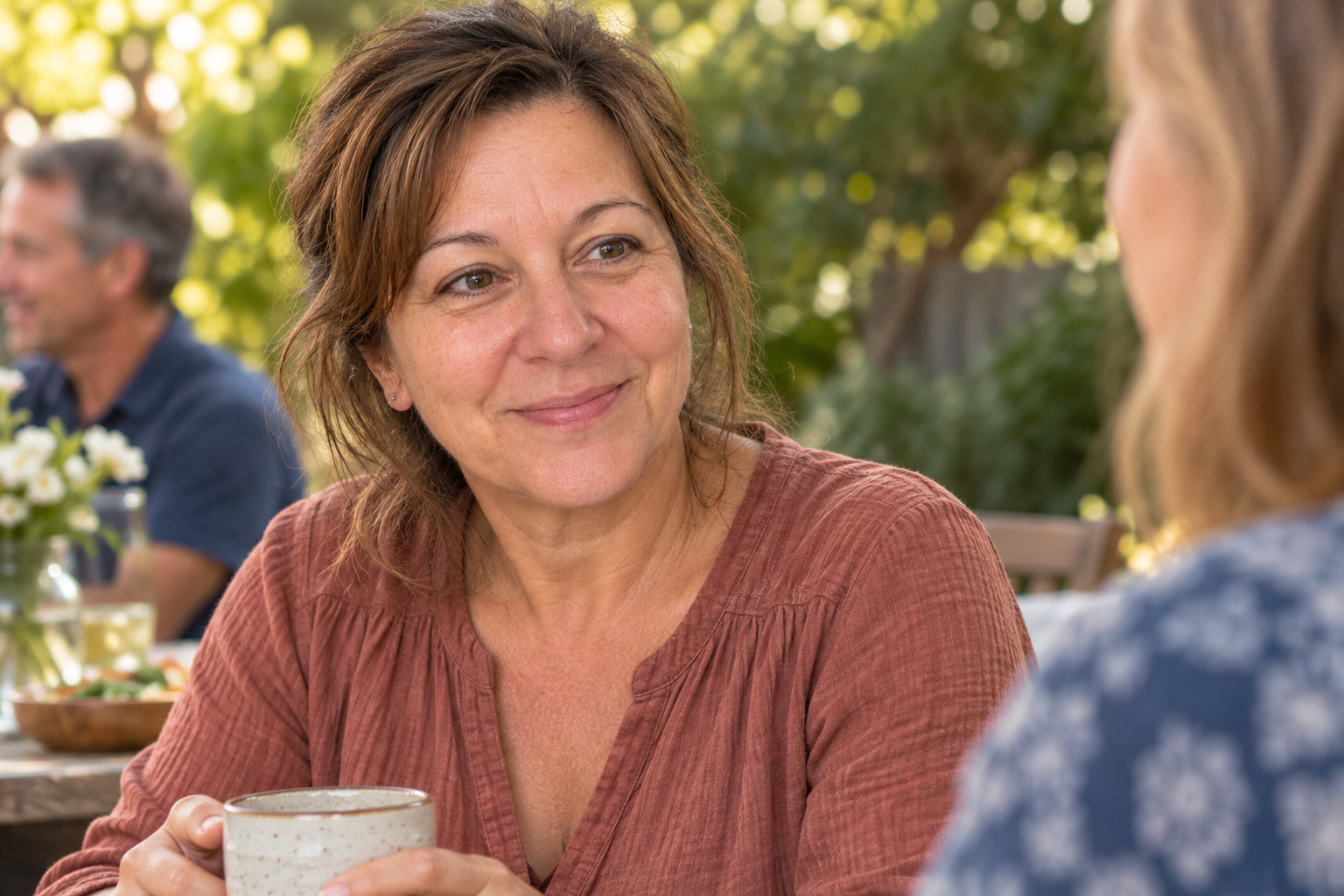
I did not wake up with a different face.
I used less base and could still see my skin. I paid more attention to comfort and luminosity. I softened the makeup around my eyes. I became more deliberate about my brows, hair, clothing colors, and posture.
Most importantly, I stopped approaching the mirror as a daily examination I was destined to fail.
Getting ready became a way to support how I wanted to feel rather than hide evidence that time had passed.
The best comments were not “You look twenty years younger.” They were “You look rested,” “You look well,” and “There’s something different about you.”
Those comments felt better because they did not suggest I had become someone else. They suggested I had become more visible as myself.
This is not a medical treatment or a promise of a particular number of years removed from your appearance. It is a framework for making more informed choices. The value is not in doing everything. It is in identifying what matters most.
## The seven-day reset I would recommend to a friend
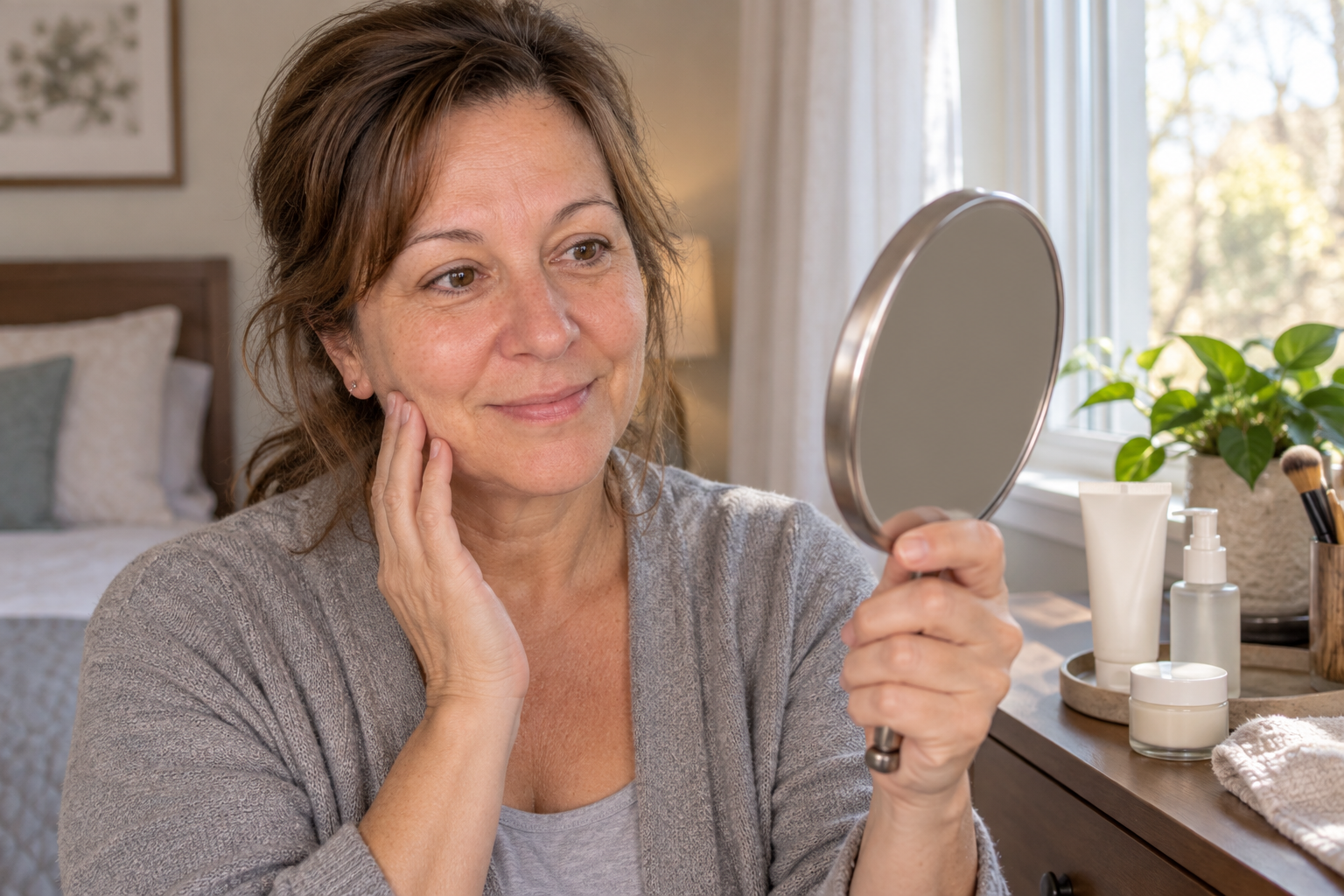
Not a seven-day promise. A seven-day observation period.
On the first day, take one photograph in natural light and write down what you notice without using the words “old,” “bad,” or “ugly.” Describe only what is visible: dry-looking areas, makeup collecting in texture, a brow that has become less defined, tension around the mouth, or colors that seem to flatten the complexion.
On the second day, review cleansing and comfort. On the third, use less complexion product and place it only where wanted. On the fourth, reconsider the line and shadow around the eyes. On the fifth, look at hair and the color nearest your face. On the sixth, notice posture in photographs and while using your phone. On the seventh, compare how the complete routine feels—not whether a wrinkle disappeared.
This sequence prevents the common mistake of changing everything at once. When six products, a haircut, and a new makeup technique arrive on the same day, you cannot tell what helped, what irritated, or what simply did not suit you.
One deliberate change teaches you more than a frantic makeover.
“But isn’t wanting to look younger anti-aging?”
It depends on what you mean by younger.
If it means believing that a woman loses value with every birthday, I want no part of it. If it means recovering some of the light, openness, and energy that stress or outdated habits have hidden, I understand the desire completely.
The title of this guide speaks the language many women use when searching for help. The pages themselves lead somewhere more generous: toward freshness, self-knowledge, and choices made without shame.
You are allowed to enjoy lipstick and gray hair. You are allowed to appreciate your lines and change your foundation. You are allowed to look after yourself without apologizing for either your age or your interest in beauty.
What verified readers say
“I finally recognize myself in photos again.”
“I wasn’t looking to look 30 again. I just wanted to stop looking tired all the time. I started with a few of the changes Catherine recommends, especially around my eyes, makeup and skincare. They were such small adjustments, but together they made a real difference. I look fresher and, most importantly, I feel like myself again.”
— Susan, 57
“I was doing far too much.”
“My bathroom was full of expensive products and I still had no idea what my skin actually needed. This guide helped me simplify everything. I changed the way I cleanse, use much less foundation and completely changed how I do my eye makeup. Getting ready feels easier now, and I’m much happier with how I look.”
— Linda, 61
“Much more useful than I expected.”
“I almost didn’t buy it because I thought it would be another anti-aging guide telling me to buy creams. It’s completely different. The sections on the Five Signals, makeup and posture made me notice things I had never considered before. Nothing extreme or unrealistic—just practical changes I can actually use every day. For the price, I’m genuinely glad I bought it.”
— Patricia, 54
You have three choices the next time the mirror feels unfamiliar
You can keep adding products one at a time, hoping the next jar will make the entire routine make sense.
You can decide you should not care at all—even when caring for yourself genuinely brings you pleasure.
Or you can understand how the signals work together and build a routine for the face and life you have now.
Here is what you receive:
- ✓ The complete digital guide, available immediately
- ✓ 25 chapters covering skin, makeup, hair, style, posture, daily habits, and mindset
- ✓ The Five Signals framework
- ✓ Practical routines designed to be manageable rather than overwhelming
- ✓ Guidance that respects natural aging
You do not need your younger face back. You need advice that understands the face you have today—and the woman living behind it.
— Catherine Wells
Advertising disclosure: this is a paid advertisement for Look Younger Than Your Age, not an independent editorial article. Individual experiences vary. This educational guide does not provide medical diagnosis or treatment and does not guarantee a particular cosmetic result. Consult a qualified healthcare professional about persistent skin changes, irritation, medical concerns, or product suitability.